Foot Pad Rejuvenation in New York City
The natural cushioning in your feet diminishes with age and activity. When it does, walking on hard surfaces becomes genuinely painful. Foot pad rejuvenation restores that cushioning with hyaluronic acid filler, directly and precisely, where it’s been lost.
When the body’s natural cushioning wears away
The heel and ball of the foot are protected by specialized fat pads — dense collections of fatty tissue encased in fibrous chambers — that absorb the impact of every step. Unlike the fat elsewhere in the body, these pads are highly specialized structures that don’t regenerate once lost.
Fat pad atrophy is the gradual thinning or displacement of this tissue over time. It can occur naturally with age, accelerate with high-impact activity, or develop after steroid injections, weight loss, or prolonged pressure on the foot. The result is a burning, bruised sensation when walking, particularly on hard surfaces, that worsens throughout the day.
Many patients describe it as feeling like they are walking on bone. Orthotics and cushioned footwear provide partial relief by redistributing pressure from the outside, but they cannot replace tissue that is no longer there. Filler injection addresses the problem directly at the source.
Heel fat pad atrophy
Plantar heel pain with every step
Thinning of the heel pad causes sharp or burning pain at the base of the heel, distinct from plantar fasciitis. Worsens on hard floors and with prolonged standing. Common in older adults, runners, and patients with prior heel injections.
Metatarsal fat pad atrophy
Ball of foot pain and sensitivity
Loss of cushioning under the metatarsal heads causes a painful, bruised sensation in the forefoot. Common in high-heel wearers, active adults, and patients with prominent metatarsal heads. Often coexists with metatarsalgia or neuroma symptoms.
Patients who are good candidates
Active adults with heel pain
Patients whose heel pain has not responded to orthotics or conservative care and where fat pad thinning is confirmed on examination or ultrasound.
High-heel wearers
Chronic forefoot loading accelerates metatarsal fat pad loss. Filler restores the protective layer that prolonged heel wear has depleted.
Runners and athletes
High-impact activity over many years can thin the fat pads faster than normal aging. Rejuvenation allows continued activity with significantly reduced pain.
Patients post-steroid injection
Repeated cortisone injections into the heel or forefoot can cause fat pad atrophy as a side effect. Filler directly addresses this complication.
What to expect
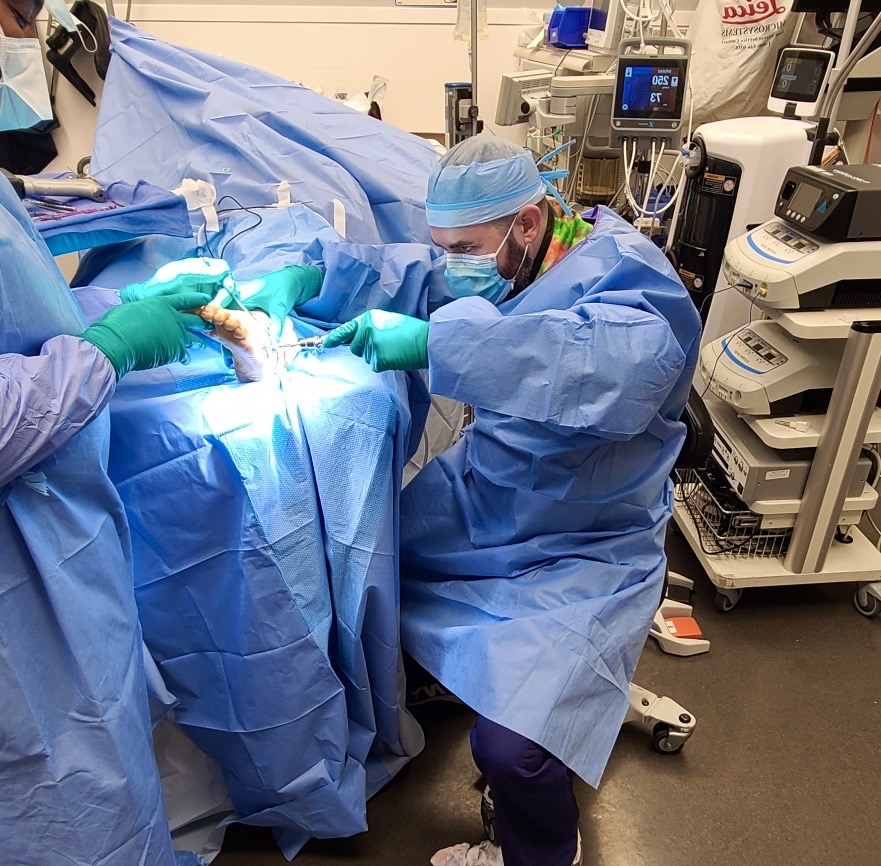
Foot pad rejuvenation uses hyaluronic acid filler, the same class of product used in facial aesthetics, injected precisely into the depleted fat pad under ultrasound guidance. The procedure is performed in-office with topical anesthesia and takes approximately 20 to 30 minutes.
Consultation
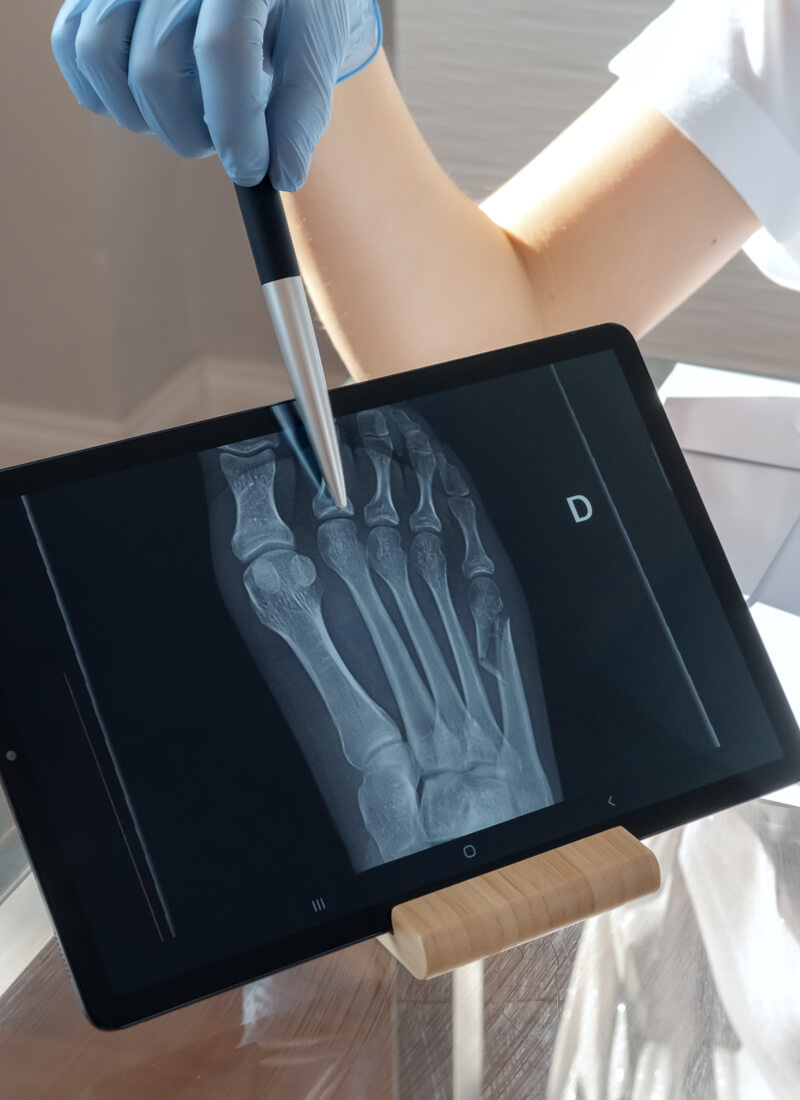
Clinical evaluation and ultrasound assessment to confirm fat pad atrophy and determine treatment areas and filler volume.
Preparation
Topical anesthesia applied. Treatment area marked. Ultrasound used to visualize the fat pad in real time.
Injection
Hyaluronic acid filler injected into the depleted pad under ultrasound guidance. Multiple small injection points for even distribution.
Recovery
Mild swelling and tenderness for 24 to 48 hours. Most patients walk comfortably the same day. Supportive footwear recommended for one week.
What patients experience
Most patients notice meaningful pain reduction within days of treatment as the filler integrates and restores cushioning. Full results are typically felt at 2 to 4 weeks
Immediate
Increased cushioning felt within days. Mild swelling initially obscures the final result — this resolves within 1 to 2 weeks.
Weeks 2–4
Full cushioning effect established. Most patients report significant reduction in pain on hard surfaces and with prolonged standing.
Duration
Results typically last 12 to 18 months depending on activity level and filler volume. Touch-up treatments maintain the effect over time.
Maintenance
Annual or biannual touch-up injections are straightforward and require less volume than the initial treatment as the pad structure is preserved.
Results vary based on the degree of atrophy, filler volume used, activity level, and footwear habits. Realistic expectations will be discussed at your consultation.