OVERVIEW
Platelet-rich plasma therapy uses your body’s own biology to accelerate healing in damaged tissue. For chronic conditions that haven’t responded to conventional treatment, PRP addresses the root cause rather than managing the symptoms.
YOUR OWN BLOOD, CONCENTRATED FOR HEALING
Platelet-rich plasma is derived from a small sample of your own blood. The sample is processed in a centrifuge to concentrate the platelets — tiny cells packed with growth factors that play a central role in tissue repair. The resulting plasma contains a significantly higher concentration of these growth factors than normal blood.
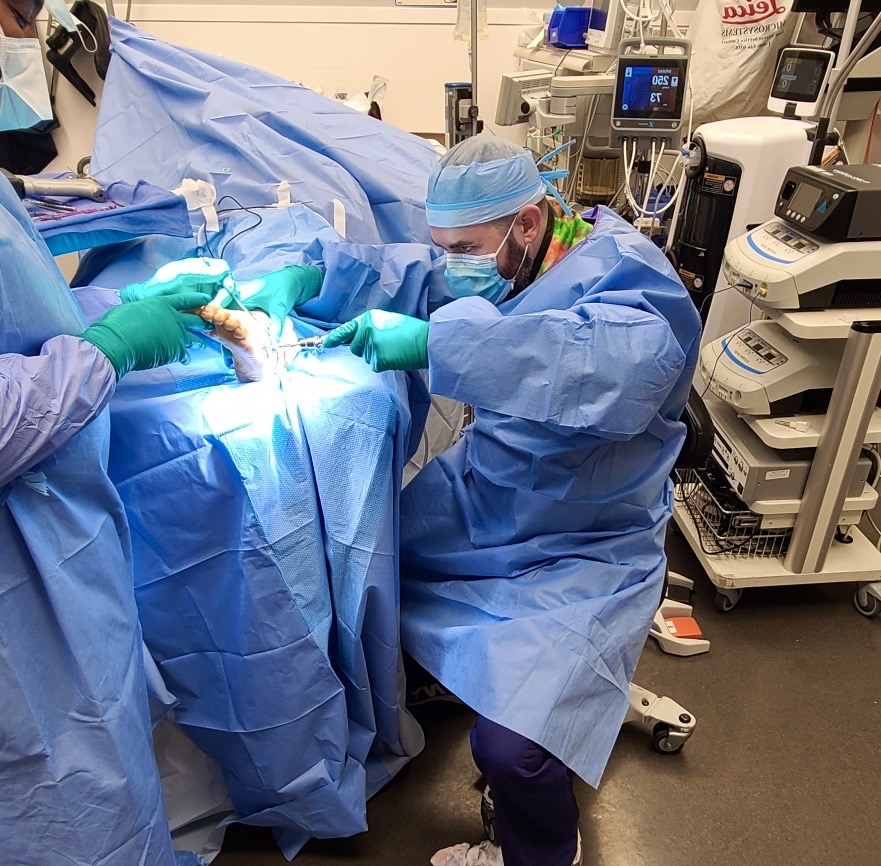
When injected into damaged or degenerated tissue under ultrasound guidance, PRP delivers a targeted dose of healing signals directly to the injury site. It stimulates cellular repair, promotes collagen synthesis, and supports the regeneration of tissue that has failed to heal on its own.
Because PRP is derived from your own blood, there is no risk of allergic reaction or rejection. All injections at Bespoke Podiatry are performed under ultrasound guidance to ensure precise, accurate placement every time.
Step 1
Small blood draw from your arm, similar to a standard blood test.
Step 2
Blood processed in centrifuge to concentrate platelets and growth factors.
Step 3
PRP injected into the target tissue under real-time ultrasound guidance.
Step 4
Structured activity protocol followed post-injection to maximize tissue response.
Where the evidence is strongest
PRP is most effective for chronic conditions where degenerative tissue change is the primary driver of pain. The evidence base varies by condition. We apply PRP where clinical evidence supports its use and discuss realistic expectations with every patient before proceeding.
Strong evidence:
Chronic plantar fasciitis
The strongest evidence base for PRP in foot and ankle. A 2025 meta-analysis of 24 RCTs with over 1,600 patients showed PRP produced significantly better pain and function outcomes than cortisone at 3 and 6 months. Best for cases lasting 6 months or more.
Promising, mixed evidence:
Achilles tendinopathy
Studies show clinical improvement; higher-level RCTs have shown mixed results. We offer PRP for Achilles tendinopathy selectively, when degenerative change is confirmed on ultrasound and other measures have not succeeded.
Emerging evidence
Plantar plate tears & sesamoiditis
Evidence is limited but mechanistically sound. PRP is offered for chronic plantar plate pathology and sesamoiditis where structural tissue support is the clinical goal and conservative care has been exhausted.
Adjunctive use
Ankle ligament laxity
Used selectively as an adjunct to conservative management for chronic ankle instability where ligament laxity is confirmed. Best considered a complement to bracing and PT, not a replacement for surgical stabilization when indicated.
Sessions, timeline, and aftercare
PRP is not an immediate fix. The healing response builds over weeks to months. Most patients notice meaningful improvement at 6 to 12 weeks, with continued progress through 6 months.
Sessions
Most conditions require 1 to 3 injections spaced 4 to 6 weeks apart. Protocol determined by condition and response.
Day of injection
Mild to moderate soreness at the injection site for 24 to 72 hours is common and expected — it reflects the healing response being initiated.
Weeks 1–6
Gradual reduction in pain as tissue repair progresses. Activity modified as instructed to support optimal healing response
Months 2–6
Most patients with plantar fasciitis experience significant improvement. Follow-up ultrasound assesses tissue response when indicated.
PRP is not appropriate for every patient or every condition. Candidacy is determined by clinical evaluation and imaging findings. Dr. Collins will discuss whether PRP is the right choice at your consultation.